How to Score in Extreme Soccer
Finishing patterns for 3v3 street soccer — clear angles, rebound control, and ability timing that beat the keeper.
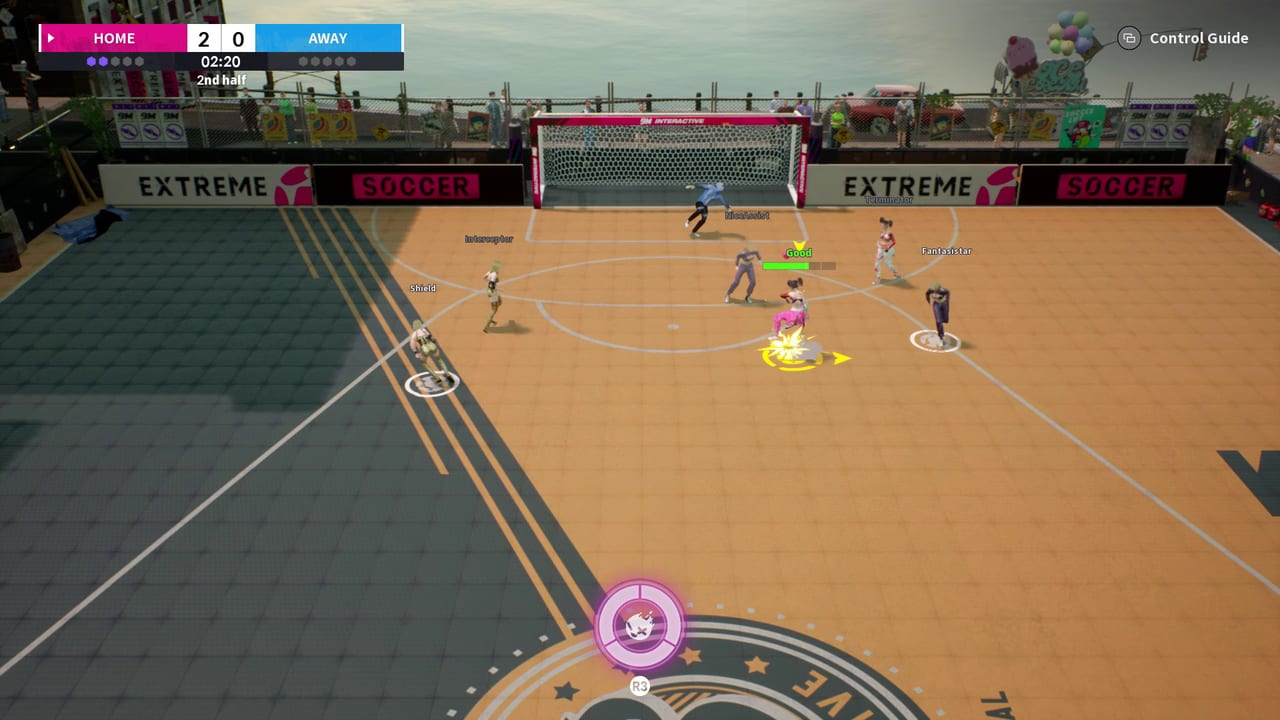
Scoring in Extreme Soccer is less about cinematic skill spam and more about manufacturing a half-second where the goalkeeper and the nearest defender cannot both cover your line. Matches are compact 3v3 street contests on Steam, so every possession is short and every wasted shot is a counterattack waiting to happen. This guide teaches finishing patterns that fit the physics court, the assisted pass system, and the five ability-driven characters released by 9M Interactive on February 4, 2021.
If you still need basic movement and possession habits, return to How to Play. For the bounce setups that create many of these chances, study Wall Physics. For role assignments that leave a finisher free, use Team Play. To convert leads into results, finish with How to Win. Roster nuances live in the Players Hub and Tier List Hub, while input comfort belongs under Controls. Also keep Tools, Review, Updates, and the Links Hub bookmarked for non-finishing questions.
What a high-quality chance looks like
A quality chance in Extreme Soccer usually has three ingredients: a clear sightline past the last outfield defender, a receiving angle that does not force an awkward body turn, and a second option if the first touch is contested. If any ingredient is missing, recycle instead of forcing a low-percentage blast. Beginners overshoot because shooting feels like progress. Experienced players wait one extra pass — often a wall bank — and suddenly the keeper is stranded.
Think in shot families rather than random triggers:
- Near-post snap after a cut inside.
- Far-post curl when the keeper cheats toward the carry.
- Rebound tap after a hard wall or blocked attempt.
- Ability burst used only when the animation beats the recovery of the nearest defender.
- Cutback finish from a teammate who dragged both markers wide.
Create the angle before you create the power
Power without angle is noise. Approach the box with your hips already open to the target corner. If you receive facing your own goal, your first touch should be a redirect toward a wall or teammate, not a hopeful turn-and-shoot into a tackle. Use the assisted pass to move the defense laterally; sideways movement opens central shooting pockets that static carries never create.
Walls are finishing tools, not only escape tools. A bank that arrives at a teammate’s feet while they face the net is often worth more than a flashy dribble. Practice the sequence: draw a press, release into the wall, arrive onto the bounce, shoot first time if the keeper is still shifting. Details for bounce prediction are in Wall Physics, but the scoring lesson is simple — first-time finishes punish late rotations.
Goalkeeper pressure and second balls
Keeper quality in small online sports games can feel uneven, which makes rebound discipline mandatory. When you or a teammate shoots, do not admire the attempt. Crash the lane where a parry is likely to drop. In 3v3, the player who arrives first on a loose ball often walks into an open net. If you are the trailer, shade the cutback instead of duplicating the same crash spot.
Also track keeper commitment. If the keeper lunges toward a near-post feint, your next action should be a far-post pass or a cutback, not another identical shot into the same dive. Extreme Soccer rewards players who change the finishing picture every possession.
Ability finishing without cooldown waste
Each of the five characters brings a unique ability. Scoring with abilities is about timing windows, not spamming the moment the icon lights up. Good ability finishes usually happen when:
- You already beat the first defender with movement.
- The second defender is committed to a teammate or a fake wall line.
- The keeper’s positioning is stretched by a prior pass.
Bad ability finishes happen when you are surrounded, the animation is predictable, and your teammates are ball-watching. If the skill misses, you often lose both the ball and your defensive recovery. Treat the cooldown as a match resource tied to How to Win clock management.
Cutbacks, hats, and assist-aware scoring
Steam achievements highlight goals, hat tricks, assists, and MVP streaks, which tells you the game wants multi-path offense. A selfish shooter who never cuts the ball back will plateau. When you occupy the byline or a wide pocket, look for the late runner before forcing a ridiculous angle. Conversely, if you are the late runner, do not stand still in the keeper’s eyeline — drift across the face of goal so a simple pass becomes a tap-in.
Hat-trick hunting is useful practice because it forces you to stay involved after the first goal. After you score, reset to a defensive starting shape instead of celebrating in the opponent’s half. The fastest way to lose a hat-trick match is to gift an immediate reply.
Practice drills you can run in live matches
Because custom training tools are limited in a small Early Access sports title, turn real matches into drills:
- Drill A: no shot until one wall interaction occurs.
- Drill B: only far-post attempts for an entire match.
- Drill C: ability reserved for rebound or 1v1 situations.
- Drill D: you may score only from a teammate cutback.
Run one drill per session. Combine with role talk from Team Play so your partners know whether you are the finisher or the server that day.
Situational finishing
Trailing by one late: prioritize first-time shots from recycled walls over uncontested carries that burn the clock. Leading by one late: take only high-confidence attempts and otherwise recycle to corners that waste opponent pressure safely — more on this in How to Win. Tied mid-match: mix shot types so opponents cannot park on your favorite pattern.
Against heavy pressers, invent space with give-and-gos into walls. Against passive blocks, carry until someone steps, then punish the vacated lane. Scoring is matchup reading as much as aim.
Common finishing mistakes
- Shooting while a teammate is unmarked at the far post.
- Ignoring the rebound lane after every attempt.
- Using abilities as panic buttons under double coverage.
- Receiving with your back to goal and forcing a turn into contact.
- Celebrating instead of resetting shape after a goal.
Link your finishing to the rest of the wiki
Character choice changes which finishing animations feel natural — compare options in the Players Hub and validate pick priority in the Tier List Hub. If your shots are fine but your stick inputs feel late, revisit Controls. If queues are quiet because of the Steam delist, treat bot-heavy or sparse lobbies as finishing laboratories rather than rank anxiety. Extreme Soccer remains a released online multiplayer title for owners; mastery still compounds even when the storefront no longer sells new copies.
Build habits here, then pressure-test them in coordinated sessions from Team Play and close matches using How to Win. Clean scoring is the loudest proof that your street-soccer fundamentals work.
Frequently Asked Questions
Quick answers to the most common questions.
What is the most common reason shots miss in Extreme Soccer?
Forcing power without a clear angle. Create a sightline with a wall bank or cutback first, then finish.
Should I use character abilities to score every time they are ready?
No. Save abilities for moments when a defender is already beaten or a rebound needs a burst. Cooldown waste loses matches.
How do walls help scoring?
Wall banks change receiving angles so teammates face goal and can shoot first time while the keeper is still shifting.
Are rebounds worth chasing in 3v3?
Yes. Compact courts produce frequent parries and blocked attempts. The first player to the second ball often scores an open finish.
Which guide pairs best with finishing practice?
Wall Physics for chance creation, Team Play for cutback roles, and How to Win for when to shoot versus recycle.
Do Steam achievements encourage selfish shooting?
Goals and hat tricks matter, but assists and MVP tracks reward shared offense. Mix finishes with cutbacks.